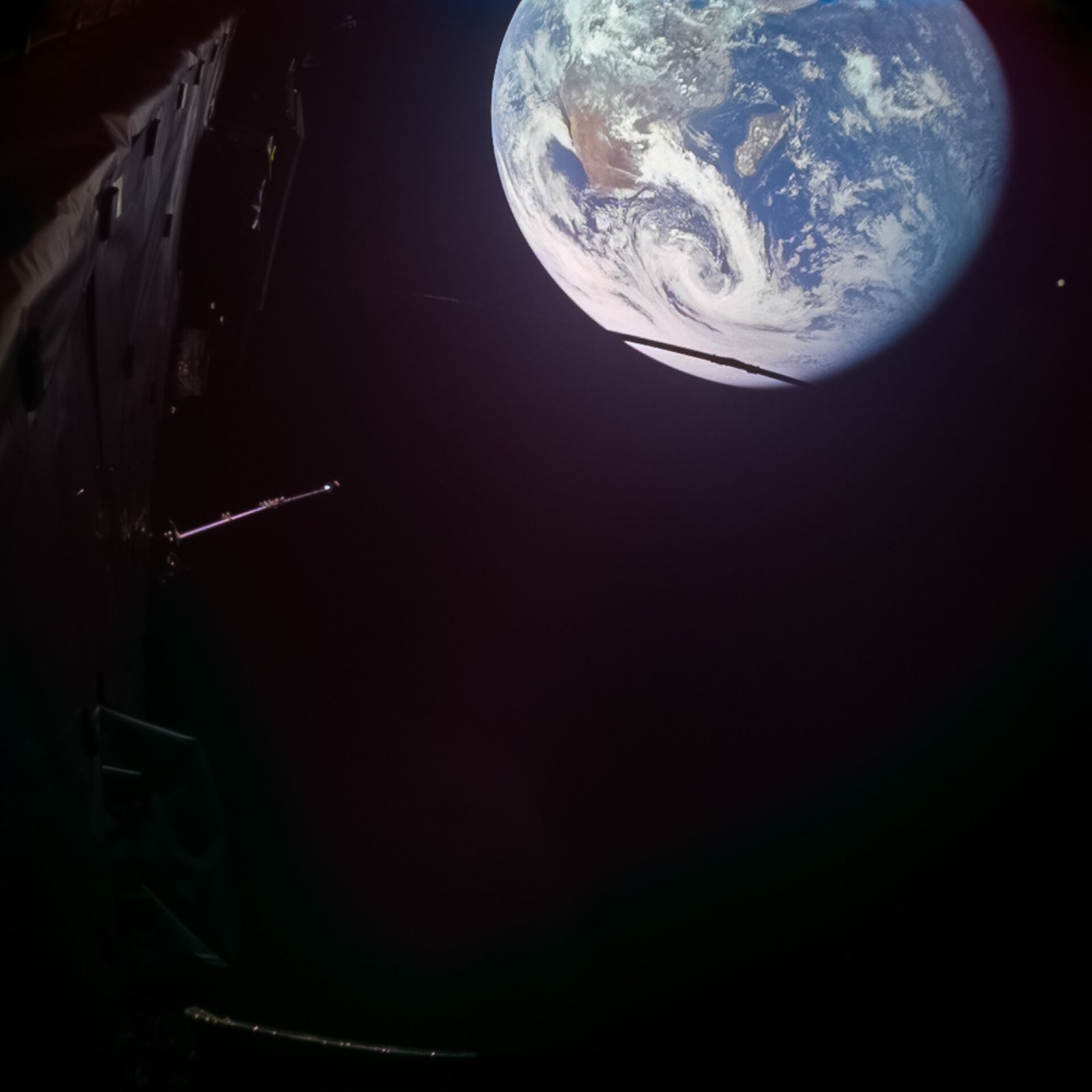
ESA reports that Juice completed its Earth flyby on September 28, 2026, passing 8,640 kilometers above the Indian Ocean at 11:45 UTC—7:45 a.m. in New York. The encounter changed the Jupiter-bound spacecraft’s trajectory and gave the mission an opportunity to check scientific instruments using Earth as a familiar target.
The September 28 mission report confirms the flyby. It does not announce a discovery at Jupiter or final results from the Earth observations.
Why the route loops back to Earth
In its pre-flyby explanation, ESA described a sequence of encounters that uses planetary gravity to shape Juice’s path while limiting the propulsion demanded from the spacecraft. The September passage sets up another planned Earth flyby in January 2029, followed by a planned arrival at Jupiter in July 2031.
Those dates describe the mission plan, not completed milestones. Entering orbit at the destination still requires a carefully designed arrival. Our explanation of gravity assists separates the change measured relative to a planet from the change measured relative to the Sun.
Earth is also a calibration target
ESA says the flyby let instrument teams observe familiar terrestrial conditions and compare their measurements with expectations. Its report distinguishes the spacecraft’s monitoring-camera pictures from scientific images and spectra that were expected after downlink and evaluation.
That difference matters when interpreting an image release. A picture documenting a spacecraft’s encounter and a calibrated measurement used to test an instrument serve different purposes, even when both show Earth.
Juice’s instrument documentation explains the distinct roles: JANUS is an optical camera system, MAJIS measures imaging spectra, and J-MAG measures magnetic fields. A successful flyby does not, by itself, establish the accuracy of every instrument or complete every planned investigation.
What is confirmed, and what comes next
The confirmed development is a completed Earth encounter. The trajectory sequence provides context for why it happened; the instrument descriptions explain what the observations can test.
The next scientific question is what the processed measurements show, including how well they agree with the calibration expectations. Those results should be judged from their own releases. For now, the evidence supports a navigation milestone and an observing opportunity on the way to Jupiter—not a new conclusion about the planet or its moons.