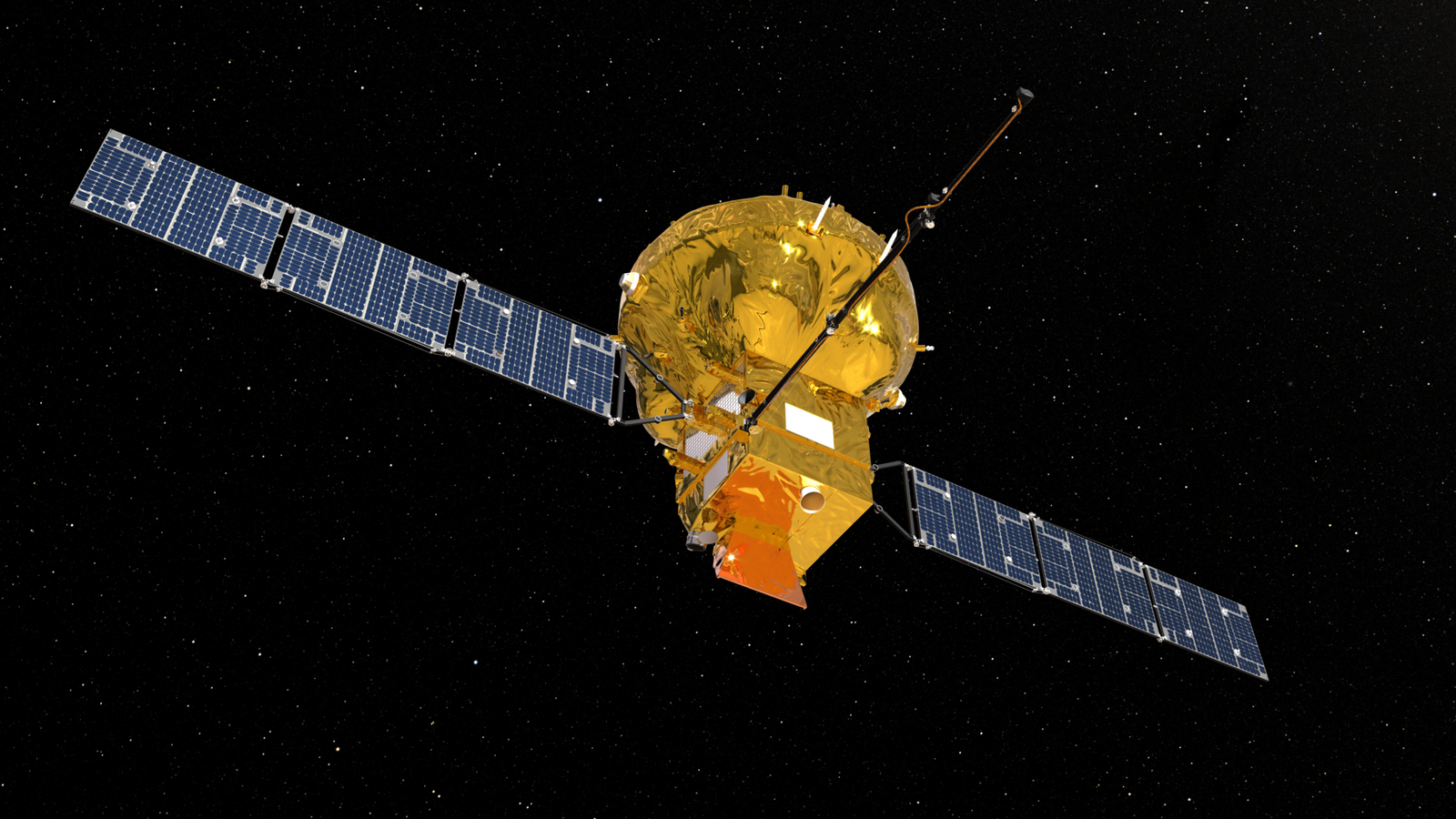
The Smile mission has been cleared to begin science operations, bringing a new approach to studying how the solar wind affects Earth. But its two cameras are at different stages: ultraviolet aurora footage has been released, while the soft X-ray camera still faces unwanted light when looking toward Earth.
ESA announced the milestone on September 30, 2026, following approval on September 23. Smile is a joint mission of ESA and the Chinese Academy of Sciences.
What the announcement actually confirms
The spacecraft’s ultraviolet imager recorded the northern auroral region on July 24. ESA released that footage with the September update. These are ultraviolet observations displayed for human viewing, not a photograph of how the aurora would look to an unaided observer.
The soft X-ray imager has also produced test images of a distant supernova remnant. For Earth-facing observations, however, ESA reported excessive stray light and work on settings and software to reduce it. The agency expected more favorable conditions around mid-October. That expectation is not confirmation that a usable image of the magnetopause has already been obtained.
Why look at Earth’s surroundings in X-rays?
The magnetopause is the boundary separating Earth’s magnetosphere from the surrounding shocked solar wind. It changes shape and position as conditions outside it change.
Smile’s X-ray camera is intended to track emission associated with this interaction region. It does not photograph magnetic field lines directly. In a process called solar wind charge exchange, highly charged solar-wind ions capture electrons from neutral atoms; the resulting excited ions can emit soft X-rays. Mapping that emission can help researchers infer the structure of the region.
ESA’s instrument explanation describes the goal: complement measurements taken at individual spacecraft locations with a wider view of Earth’s magnetic environment. That connection between a measured signal and a physical interpretation is central to the mission.
Four instruments connect the local and global views
Smile carries two imagers and two instruments that sample its immediate surroundings. The ultraviolet imager observes auroral emissions. The soft X-ray imager targets the interaction region on Earth’s Sun-facing side. A magnetometer measures the local magnetic field, while a light ion analyzer measures local charged particles.
Combining them should help scientists compare a change in the solar wind with changes at the magnetosphere and in the aurora. The mission’s instrument overview distinguishes these remote images from local measurements; neither alone supplies the whole picture.
What to watch for next
The next meaningful evidence will include calibrated observations of the intended Earth-facing targets and scientific analyses connecting the instruments’ measurements. Starting operations is a milestone in collecting those data, not the completion of that analysis.
Unwanted light also illustrates a broader challenge: a working detector must distinguish its target from background signals. The same principle appears in infrared telescope cooling, although the thermal background discussed there is a different problem from Smile’s reported stray light.
For readers, the useful distinction is between a released observation, an instrument’s intended capability, and a result still awaiting evidence. Smile’s September update contains all three.